Global regulatory experts have confirmed that Mexico is hemorrhaging $800 million annually due to a booming illicit tobacco and vaping market. Driven by strict national bans on alternative nicotine products, this underground economy has directly empowered criminal cartels while draining critical funds meant for public social programs.
Tamas Sipos, global head of regulatory strategy and illicit trade prevention at Philip Morris, highlighted the severity of the issue at a recent press conference. He noted that Mexico’s illicit tobacco trade sits at 20 percent, significantly higher than the global average of 15 percent. Out of the country’s 15 million smokers, an estimated 3 million are consuming illegal products.
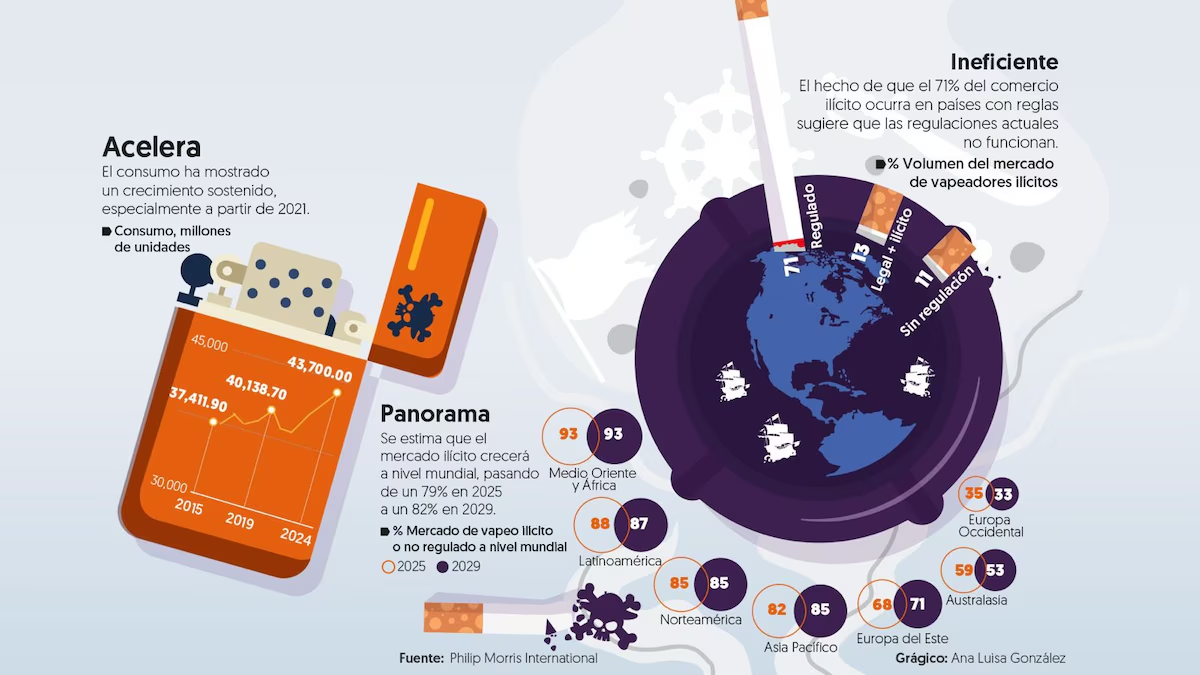
The situation has deteriorated further following the government’s ban on new nicotine categories, such as vapes and nicotine pouches. Rather than curbing use, these prohibitive policies have fostered an unregulated gray market that now serves up to 7 million people across Mexican territory.
According to Sipos, this prohibition effectively hands market control over to criminal gangs. The revenue generated from illegal vapes creates a circular criminal economy that finances drug trafficking, human trafficking, and extortion. Furthermore, the reliance on online black markets, such as Facebook and Instagram, exposes young buyers to direct threats and extortion from organized crime groups.
The structure of this illicit market is primarily divided into three distinct categories:
- Counterfeiting: The production of fake versions of established, legal brands.
- Classic Smuggling: The diversion of legally produced tobacco products into illegal, untaxed distribution channels.
- Illicit Whites: Cigarettes manufactured in countries like Paraguay, South Korea, China, and Vietnam with the sole intention of being smuggled and sold illegally without trademark registration or tariff payments.
Data indicates that a staggering 75 to 90 percent of illegal cigarettes in Mexico fall into the “illicit whites” category, demonstrating the fragility of current border controls against international smuggling networks.
This localized issue is part of a broader continental crisis. According to the recent KPMG report, ‘Illicit Cigarette Consumption in Latin America and Canada 2025’, nearly one-third of cigarettes consumed in the Americas are contraband. This illicit activity resulted in $8.5 billion in lost tax revenue last year, with Mexico, Brazil, and Canada suffering the greatest financial hits.
Industry leaders and regulatory experts are urging governments to abandon prohibition in favor of strict regulation. Sipos pointed to countries like Sweden and New Zealand, where legal access to regulated nicotine alternatives has successfully reduced smoking rates and dismantled the black market, arguing that Mexico’s current ban is a profound lost opportunity for both public health and economic security.