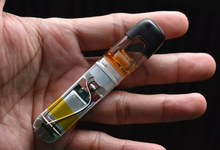
The German federal government is advancing phased tax increases on conventional cigarettes and reduced-risk alternatives through 2030. While authorities previously presented tobacco duties as health measures designed to deter smoking, parallel tax hikes on e-cigarette liquids demonstrate that the finance ministry is using consumer dependence to secure state revenue.
Tobacco taxation yielded €17.6 billion for the federal treasury in the past year alone. Under the current schedule, pack prices for combustible cigarettes will rise to approximately €14 by 2030. Meanwhile, e-cigarette liquids, which have already seen tax rates double since the introduction of the liquid tax in 2022, face further…
Turkish Health Minister Kemal Memişoğlu announced that the government is drafting new legislation to enforce age verification at retail counters, curbing illegal tobacco sales to minors. While Turkish law already bans selling tobacco products to individuals under 18, authorities are moving to close retail enforcement gaps through verifiable checkpoints.
Developing Privacy-Compliant Age Verification
Health officials are reviewing several mechanisms to verify buyer age during retail transactions. Minister Memişoğlu stated that regulators are assessing electronic systems capable of validating government ID credentials without creating secondary privacy risks.
The primary challenge involves confirming a buyer’s legal age while safeguarding personal data. Officials…
Medical researchers have clarified the distinct health profiles of tobacco combustion and electronic vaporizers, confirming that while neither is harmless, smoking remains far more destructive. Dr. Rayyan Zafar notes that traditional tobacco products carry the highest health burden, even as physicians raise alarms over nicotine dependency among non-smokers.
Comparing Toxic Exposure: Tobacco Smoke vs. E-Cigarette Aerosol
Decades of clinical research link combustible tobacco directly to cancer, cardiovascular disease, and chronic lung damage. E-cigarettes do not burn tobacco leaves, which eliminates many of the tar and carbon monoxide byproducts produced by traditional cigarettes.
Despite this reduction in combustion products, vapor devices…
The Office for National Statistics (ONS) has confirmed that more than 1.1 million people in Great Britain who have never smoked cigarettes now use e-cigarettes. This shift coincides with an ongoing drop in combustible tobacco use, making vaping more prevalent than traditional smoking for the second consecutive year.
Overall, 5.4 million people aged 16 and over in Great Britain use e-cigarettes, while the number of cigarette smokers across the UK fell from 5.3 million in 2024 to 4.9 million in 2025. Less than one in ten UK adults now report smoking cigarettes.
Metric2024 Figures2025 FiguresNever-Smokers Who Vape~940,0001.1 millionTotal UK Smokers5.3…
Discarded vapes are triggering an estimated 1,200 fires per year across UK waste and recycling facilities. Despite the national ban on single-use vapes enacted in June 2025, millions of battery-powered devices continue to contaminate general rubbish streams, creating hazardous conditions for waste operators and emergency services.
New data from Material Focus indicates that 23% of all UK waste battery fires stem from vapes, with 91 publicly documented incidents recorded since 2023. Recent heatwaves have intensified the hazard, leaving waste dry and accelerating the spread of blazes once batteries ignite.
Contamination Persists Despite the Single-Use Ban
Although the June 2025 sales…
Public health data showing that second-hand smoke kills 1.7 million people annually has sparked calls for Brazil to tighten its anti-tobacco restrictions. Following public policy models in Singapore and Mexico, health advocates urge authorities to restrict outdoor smoking spaces and halt the rapid spread of illegal vapes among youth.
According to research published in The Lancet Public Health, more than 2.7 billion people worldwide—including 767 million children—face routine exposure to passive smoke. The study notes that uninhaled sidestream smoke carries higher concentrations of toxic carcinogens than directly inhaled smoke, driving 1.7 million deaths out of 8 million total tobacco-related fatalities in…
The number of South Korean smokers using traditional cigarettes alongside both heated tobacco products and liquid e-cigarettes has surged more than fourfold over the past five years. Because these multi-product users face lower cessation success rates, health policy experts are demanding customized public support programs.
According to data submitted by the Korea Health Promotion Institute to Representative Han Ji-ah of the People Power Party, “triple-product smokers” registered at public health quit clinics grew from 742 in 2021 to 3,009 last year—a 4.1-fold increase. Dual users of traditional cigarettes and heated tobacco rose 2.7 times to 10,942, while dual users of…
Adult nicotine consumers across the globe are shifting away from traditional cigarettes, but preferences vary across borders. Local regulations, established cultural habits, and daily lifestyles determine whether users adopt compact nicotine pouches, heated tobacco devices, or electronic cigarettes.
The United States: Rapid Growth in Nicotine Pouches
The United States has emerged as the largest market for oral nicotine pouches. Between 2023 and 2025, monthly pouch sales expanded by nearly 251%, driven by strict indoor smoking prohibitions and consumer demand for discreet, portable options.
Regulatory decisions have supported this market trajectory. In early 2025, the US Food and Drug Administration (FDA)…
Falling smoking rates, tighter regulations, and shifting consumer preferences are eroding the dominance of traditional cigarettes. As the combustible market contracts, manufacturers and consumers are turning to alternative delivery methods, with oral nicotine pouches establishing a distinct footprint alongside electronic cigarettes and heated tobacco devices.
Nicotine pouches are placed between the upper lip and gum, where nicotine is absorbed directly through the oral mucosa. Unlike traditional Swedish snus, modern nicotine pouches contain no tobacco leaf, relying instead on nicotine salts or synthetic nicotine combined with plant-based fibers and flavorings. This design eliminates combustion, smoke, ash, and odor.
Market Comparison: Cigarettes…
Turkey’s Ministry of Health has drafted legislation to tighten restrictions on cigarettes, e-cigarettes, and heated tobacco products. Expected to reach the Grand National Assembly of Turkey (TBMM) in November following presidential review, the bill introduces retail controls and targets a complete phaseout of tobacco sales by 2040.
Hidden Retail Displays and Digital Age Checks
The proposed measures change how tobacco and vapor products are marketed and sold in retail outlets:
Concealed Storage: Retailers can no longer display tobacco products openly; all stock must be stored in closed, non-visible cabinets.
Digital Age Verification: Transactions must be processed through automated systems that…