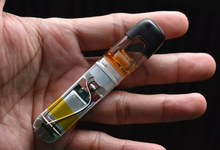
Disposable vapes face heavy criticism for their environmental impact. Millions of these devices end up in household waste monthly, despite containing functional lithium-ion batteries. To demonstrate the wasted potential of these discarded electronics, British YouTuber and engineer Chris Doel built a massive home power bank using salvaged vape batteries.
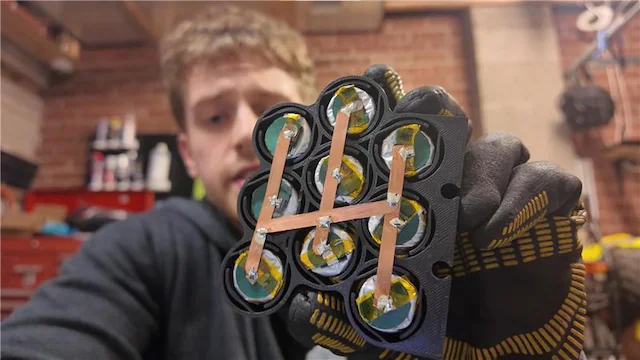
Doel, a 29-year-old engineer at Jaguar Land Rover, collected over 500 discarded disposable vapes for his latest project. He extracted the batteries, testing each one to ensure viability. For this large-scale build, he selected only the larger 5 Wh cells, discarding smaller 1.8 Wh batteries to optimize efficiency.
Powering a Home with Vape Waste
After sorting the cells, Doel soldered the batteries into packs and secured them with aluminum brackets. He integrated the system with an electric scooter battery management system (BMS) and a 3 kW inverter.
The completed power station holds 2.5 kilowatt-hours (kWh) of electricity, delivering 50 volts of direct current (DC), which the inverter converts into standard 230-volt alternating current (AC). This setup allows Doel to run his workshop independently for three days. Alternatively, it can power his entire apartment—which consumes about 6 kWh daily—for approximately eight hours.
This is not Doel’s first recycling attempt. He previously built a 62 Wh portable power bank using 35 vape batteries to power his electric bicycle. He enclosed that version in a custom 3D-printed case with an upgraded battery management system.
The Environmental and Safety Reality
While the project showcases creative recycling, Doel warns that rebuilding lithium-ion batteries is highly dangerous. Damaged or improperly wired cells pose severe fire hazards.
The sheer volume of available batteries highlights a growing waste crisis. In Germany alone, the Association for a Tobacco-Free Enjoyment (BfTG) estimated that five million disposable vapes were sold monthly in 2023. These devices frequently end up in standard trash cans rather than recycling centers, creating fire hazards at waste facilities and wasting valuable raw materials like lithium.
Governments are taking action to curb this waste stream. The United Kingdom banned the sale of disposable e-cigarettes in June 2026. Germany and the wider European Union plan to implement similar bans by the end of 2025.