
The Australian Border Force and federal health authorities are struggling to contain a rapidly evolving online black market for illicit tobacco. Criminal syndicates are now using sophisticated e-commerce websites and Australia Post to distribute cheap, illegal tobacco and vapes nationwide, bypassing traditional physical storefronts.
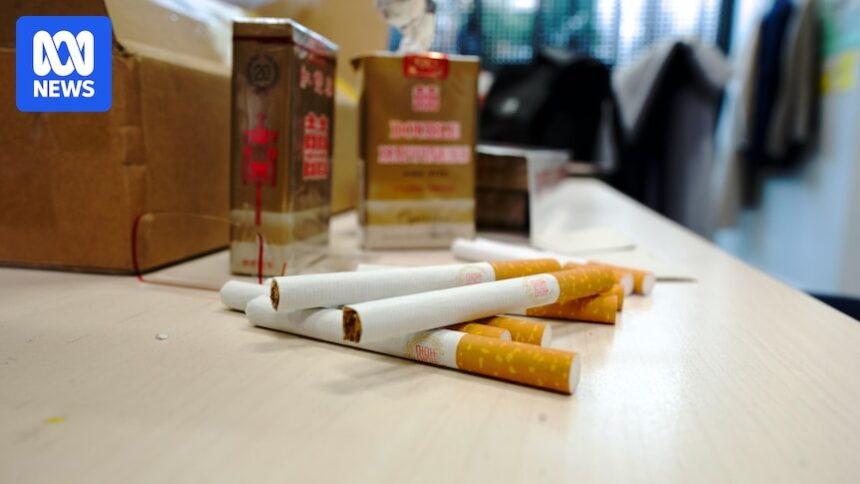
To test the accessibility of these networks, investigators recently purchased a carton of illicit tobacco online for $150—one-third of the retail price of legal products. The transaction was completed via bank transfer and coordinated through WhatsApp, with the package arriving at a Melbourne office via standard express post within three business days.
Amber Shuhyta, Australia’s Illicit Tobacco and E-cigarette Commissioner, noted that while physical shops remain the primary distribution channel, the digital market is expanding quickly. In response, federal agencies are working with the Therapeutic Goods Association and the Department of Health to identify and shut down these illegal domains.
This digital expansion is fueled by the immense profitability of the trade. Former Australian Border Force Commissioner Michael Outram pointed out the extreme financial incentives for organized crime, which now rivals traditional drug trafficking as a primary revenue stream.
| Product / Metric | Illicit / Wholesale Cost | Legal / Street Retail Value |
|---|---|---|
| Tobacco Carton (10 packs) | $150 (Black market online) | ~$450 (Legal retail equivalent) |
| Bulk Import (10 million cigarettes) | $250,000 (Importation cost) | $7,500,000 (Street value) |
This financial windfall has sparked violent turf wars, particularly in Victoria. State police have linked the illicit tobacco trade to nearly 200 arson attacks and six murders. Despite making over 500 arrests, Victoria Police’s Arson Squad admitted that law enforcement has yet to disrupt the core business model of these syndicates.
Border security strategies also face scrutiny. Outram criticized current protocols, revealing that the Australian Border Force x-rays only about 1% of incoming shipping containers. He urged immediate investment in detection technology to close this operational gap.
Shuhyta defended the agency’s record, pointing to the seizure of 2.1 kilotons of illicit tobacco and over six million illegal vapes during the 2024/2025 financial year. She argued that scanning every container would cripple port productivity, advocating instead for targeted, intelligence-led interventions to disrupt high-risk shipments.